Intro: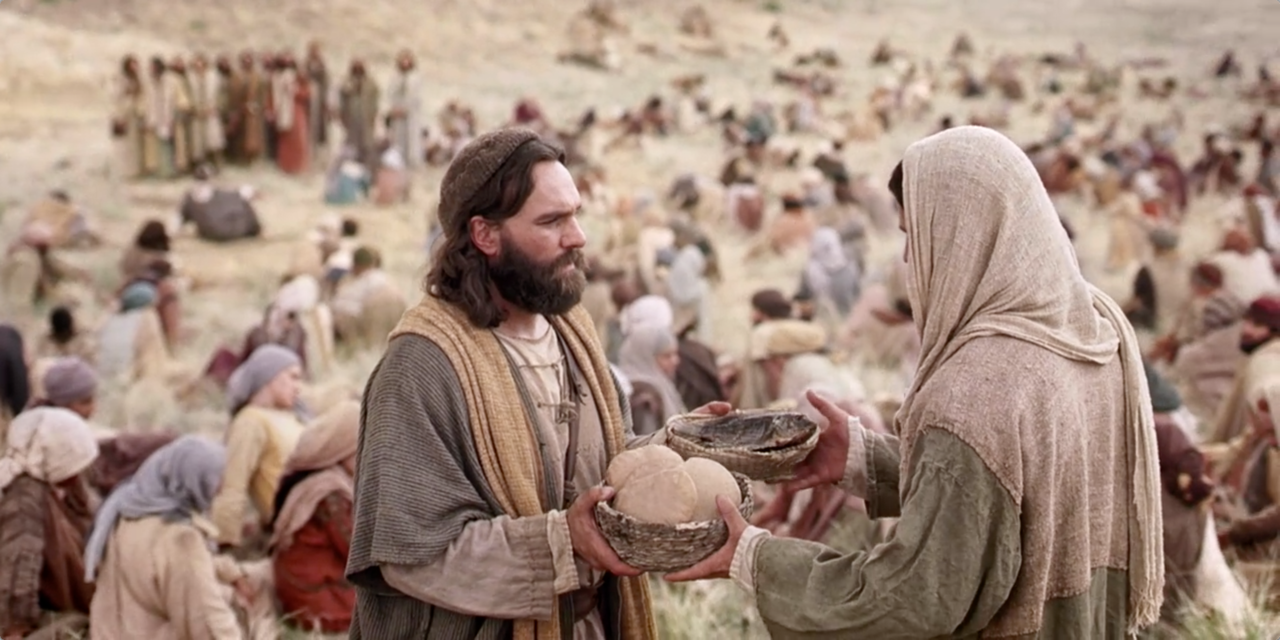
- Details. When we think about them, there is a general dislike for them.
- In fact we have come to prefer the little phrase, “the devil is in the details” as opposed to its much earlier cousin, “God is in the details”.
- The earlier phrase was intended to express the reality that God cares about details, so we should be diligent to address them.
- Our more modern variant expresses our dislike for details by making it clear that they will be deceptive, frustrating, and problematic.
- And yet, details are important.
- I am sure that none of us want a surgery performed non-detail oriented surgeon. Nor would we want a detail-less pharmacist filling our prescriptions.
- We would not want our homes or cars built by architects, engineers, and contractors who did not care about details.
- Really when it comes to those who take care of us, we really care about details!
- On the other hand, when we are the person in charge taking care of the details, we far more often complain at the time they consume or downplay their importance.
- We have a dislike for detail oriented people, as much as we have a dislike for dealing with details.
- Attention to detail has a tendency to push people away, as the focus turns to the process or the product desired.
- Attention to detail also can have a tendency to overlook faith or God’s role due to the focus being on the substance of the contemporary challenges
Hook:
- So, if we were to look at two detail oriented disciples we might think that Jesus would want to change their most basic tendencies.
- But Jesus, the Word made flesh, cared so much about details that He created a world that runs on minute details. He fulfilled every prophecy about the Messiah to the finest detail. And he addressed every sin on the cross not leaving out even the smallest detail of sin in our lives.
- So instead of overlooking these disciples of detail or seeking to totally change their fundamental nature, Jesus sought to train Andrew and Phillip to utilize their tendency towards details for his glory.
Message Points:
- There are four passages in the New Testament that list the twelve disciples.
- In these passages, the list splits into three groups of four. The inner circle, those closer Christ, the fringe disciples.
- The lists each begin with Peter and each end with Judas – except the list in Acts due to his death.
- Andrew is always listed in the inner circle, though he seems to be the one of those four who focused on details.
- Phillip is always listed with the closer disciples, always as their leader, the first one named of the second group.
- For both Andrew and Phillip, their stories with Christ begin with their own conversions.
- Andrew had been one of those first disciples called to Jesus in John 1:35-42.
- He was a disciple of John the Baptist, likely with his compatriot from the fishing business, John, son of Zebdee.
- When John the Baptist proclaimed that Jesus was the Lamb of God, Andrew and John immediately followed Jesus.
- Their hearts were tender and ready to follow, and Jesus said to them to come and see who he was.
- Verse 41 tells us that just as soon as he was sure that he had discovered the Messiah that he went to his brother Simon Peter, told him that they had found the Messiah, and brought Peter to Jesus.
- The most distinguishing feature of Andrew’s ministry is that he always noticed seekers and brought them to Jesus.
- Phillip is the first disciple that Jesus personally found. Look at John 1:43.
- Perhaps it was simply because Jesus knew Phillip was caught up in a web of details and would not notice him unless he was sought.
- Perhaps it was because Phillip had come up in conversation with Andrew and John the day before.
- Phillip was a disciple from the same town of Peter and Andrew, Bethsaida.
- He likely was also a fisherman and may have even been employed by Peter and Andrew or James and John.
- Perhaps it was because Jesus knew if Phillip saw His example of seeking sinners Phillip adopt that process.
- Just as soon as Phillip heard Jesus call him with the words follow me, he was converted and went to find his friend Nathanael.
- Phillip told his friend that he had found the Messiah – though it was Jesus who had found him.
- In telling him, Phillip goes immediately to the details mentioning how Christ fulfilled what Moses and the prophets wrote about the Messiah. He even mentions that Jesus is of Nazareth, and the son of Joseph.
- We will talk about Nathanael later, but you can see that Phillip, like Andrew was at his best when he was seeking people to bring to Jesus.
- Andrew had been one of those first disciples called to Jesus in John 1:35-42.
- So as our 1st point today: The most important detail to remember is that Jesus is a game changer (06:05-06).
- As we look at the text in John 6 we can see that Jesus saw the great crowd coming, and knew they would be hungry.
- Jesus knew as verse six said, what he would do.
- Jesus also knew that he needed to test His detail disciples.
- When the Bible uses that word test or trial it is not meant to give us the impression that failure would mean ejection from the group.
- It also did not mean that Jesus was seeking information that he did not know.
- As we can see, He already knew what he would do, so He knew what would happen.
- He also chose to ask one of the two disciples who would struggle most with this challenge, and likely Andrew was in earshot. He already knew their hearts.
- Jesus wanted to help them evaluate how far they had come, and how much they needed to grow.
- Both disciples should remember how he has made water into wine, how he has healed the sick, and cast out demons. They should remember that Jesus is a game changer!
- But they come to realize in this account that they still needed to grow.
- Tests and trials in our lives are not intended by Jesus to push us away from Him, but to help us evaluate how close we want to be to Jesus.
- Consider the trial you face right now that stresses you the most.
- I can guarantee the reason it stresses you so much is that the details of this trial obscure your view of Jesus.
- If it is sickness, the details of treatment may make it hard to see that Jesus can raise people from the dead.
- If it is an overwhelming debts, the details of the bills you must pay may make it hard to see that Jesus can create material blessings from nothing.
- If it is children, family, or friends that seem possessed, the details of their difficult behavior obscure that Jesus can cast out any demon.
- I am here to remind you today, that with Jesus nothing is impossible.
- On the night of his betrayal, Jesus spoke these words in John 14:13-14 “And I will do whatever you ask in my name, so that the Father may be glorified in the Son. You may ask me for anything in my name, and I will do it.”
- In that passage, asking in Jesus’ name is equivalent to asking according to His will.
- For his detail disciples listening that night and today, it may seem outlandish to think that Jesus will answer, no matter what the obstacle, as we ask according to His will, but friends he will do it!
- After all, is that not the crux of the sinners prayer?
- Our conversion depends up us believing that with Jesus nothing is impossible
- We come asking that Jesus forgive every consequence of our sin He does so by paying the penalty for our sin down to the last detail.
- We come asking to follow Jesus. He then empowers us to do so by filling us with the Holy Spirit so that every detail of our need is met.
- Friends do not forget, and be often reminded that with Jesus, nothing is impossible.
- As we look at the text in John 6 we can see that Jesus saw the great crowd coming, and knew they would be hungry.
- Back to our detail disciples, as is so often the case, once converted, they fell into the old patterns of their lives.
- Andrew was the fellow in the fishing boat who did not mind not catching the most fish, he just loved the company.
- He didn’t mind that Simon Peter always got to tell the fish stories, he would rather be cleaning and preparing the fish for supper.
- Andrew’s greatest temptation was just to go along with others, making sure to handle the details, but missing how Christ wanted him to contribute in important moments.
- Of the accounts we have of Andrew, when he acts alone, He shows his understanding of Jesus’ mission and his willingness to follow Christ’s lead.
- His name in Greek means manly. Andrew always, when separated from the group displays the right kind of manly servant leadership for us to pray that men of our church exhibit. A godly man seeks to lay his life down for those in his care no matter what the cost.
- Phillip on the other hand was more bold, but often with a very negative and pessimistic bent.
- Phillip seems to always have an edge to him. His name means in Greek “lover of horses” and was the name of Alexander the Great’s father.
- Phillip’s family, while Jews may have been Hellenistic Jews. These Jews were ones that did not oppose and sometimes welcomed the culture and the language of the Greeks. Perhaps all of his life Phillip had been treated as an outsider. A Jew, but one of “those Jews”.
- Phillip the apostle stands in contrast from Phillip the deacon in Acts. Phillip the deacon, seems to have been extremely pliable to the will of God, so much so that he did not miss a beat when he was transported to speak to the Ethiopian eunuch.
- As we will see with Phillip the disciple, he seems to get hung up on every detail, always stating the obvious negatively, never seeming to take the leap of faith.
- Phillip’s greatest temptation was to focus on the details so greatly that he missed the most important detail, namely Jesus.
- Andrew was the fellow in the fishing boat who did not mind not catching the most fish, he just loved the company.
- That is our 2nd point: Details can distract us, deceive us, and depress us unless we remember the most important detail (06:07)
- As we look at Phillip’s immediate response we see that he has been calculating in his head.
- Perhaps he asked Judas for an update on the money bag. 200 denari.
- One denari, or one day’s wages, would buy twelve small wheat loaves. It would buy double the amount of small barley loves.
- I have counted 5000 men, probably means 15000 or so all together. That means I need 625 barley loaves. That means 625 denari.
- What if we broke the loaves in two? No that would still be 312 denari.
- Could we quarter the loaves and still feed the crowd enough to satisfy? That would be 174 denari.
- Thus Phillip responds to Jesus’ question saying that what they had, a little more than half a year’s wages or 200 denari would not buy enough for them to have a bite.
- The details had blinded him to the most important detail – he could simply report the need and ask Jesus for help.
- Notice, recognizing the need was not sinful. Doing a detailed study of a problem is godly.
- That way we know the exact prayer request we should ask.
- The sin and failure on Phillip’s part was to see the needs in detail and not to turn to Christ for help.
- Friend how often when you are caught up in the details do you turn to Christ.
- Let me give you another example from the life of Phillip and Andrew to see the need to understand the details, but turn to Christ.
- In John 12:20-22 Phillip has a group of Greeks come asking to see Jesus. We do not know if these were Hellenistic Jews or if they were foreigners.
- The point is that they wanted to see Jesus. They had come to speak to the one disciple who had ties to Hellenistic culture. He also seemed to be the disciple that Jesus and the twelve looked to for administrative details, as in John 6.
- What we read next is unbelievable. Phillip upon hearing their request basically said, “that’s above my pay grade” and took them to Andrew.
- He may have legitimately thought that they had a better chance of seeing Jesus by meeting with Andrew.
- He may also have known that Jesus had said a number of times that he had come for “the lost sheep of Israel”, like in Matthew 10:5-6 or 15:24.
- Phillip was caught up in the negativity he associated with Jesus’ statements so much so that he missed the real point of those statements. Jesus was telling his disciples that he was going to the Jew first and then to the Gentile as Paul summarized in Romans 2:10.
- Jesus said that he would not reject any who seek him. John 6:37 says that “whoever comes to me I will never drive away”. Phillip and those like him, that is an important detail to remember.
- What if Phillip had turned when he realized these were Greeks to Jesus and had said, “Lord there are some Greeks seeking you and you said whoever seeks you will not be driven away. May they come and meet you?”
- Friends this is the solution to many of our issues as believers.
- In our own convention today there are complex theological arguments about the details of salvation held between Calvinistic Christians and Armenian Christians.
- With all the arguing, neither side should forget that the Lord will not turn away those who seek Him.
- Our focus should not be on the details of salvation so much as it should be on praying for God the Holy Spirit to work as we share the gospel – “faith comes by hearing and hearing by the Word of Christ” – and asking people to seek Christ!
- In our personal lives, with all of the details of our problems beating us down, we need to scour the Scripture to find promises of God like John 6:37 and pray that Jesus will honor His Word!
- As we look at Phillip’s immediate response we see that he has been calculating in his head.
- Thus we have our 3rd point: No matter what the details indicate, we should turn to Jesus (06:08).
- This is the beauty of Andrew’s character. He noticed the details. He understood the challenges. Even so, He brought the matters to Jesus.
- In John 6:8 Andrew comes with just a kernel of belief, bringing the boy and his lunch to Jesus.
- Some think Andrew came with fear and doubting. I believe he came with hope and faith.
- As he said the words, “how far will they go among so many?” I wonder if Andrew did not wink at Jesus and jab Phillip in the side.
- It is as if Andrew comes with the little that he has and says, “Watch what Jesus can do.”
- In John 12 again it is Andrew who, when confronted with the Greek seekers does not hesitate, but has faith that Jesus will see them.
- Here we do not have the benefit of words, but Andrew, taking Phillip with Him goes immediately to Jesus.
- Then Jesus shares with his disciples and the Greeks these words.
- “23 Jesus replied, “The hour has come for the Son of Man to be glorified. 24 Very truly I tell you, unless a kernel of wheat falls to the ground and dies, it remains only a single seed. But if it dies, it produces many seeds. 25 Anyone who loves their life will lose it, while anyone who hates their life in this world will keep it for eternal life. 26 Whoever serves me must follow me; and where I am, my servant also will be. My Father will honor the one who serves me.”
- Jesus shares in these verses the gospel one more time.
- In these verses Jesus affirms his deity in the idea of him being glorified.
- He affirms the reality of His death and resurrection in the seed being planted, dying and raising up again.
- He affirms his desire for great fruitfulness in that he does not want a single seed, but many.
- He affirms the need to turn from self and sin in verse 25.
- He affirms the need to turn to Him, serve Him and follow Him in verse 26.
- Finally he affirms the reality of an eternal rewards by saying that the Father will honor those who serve Christ.
- That gospel makes it plain that…
- If you want to have a relationship with God, turn to Christ.
- If you want to have a life that never ends, turn to Christ.
- If you want to have a life that bears much fruit, turn to Christ.
- If you want to escape the consequences of a life lived for self, turn to Christ.
- If you want to serve Christ, turn and follow Him.
- If you want to have an eternal reward, turn to Christ.
- That is the message to all of us who may get caught up in details – turn to Christ, no matter what.
Conclusion:
- Tradition tells us that Andrew took the gospel north, as far as modern day Russia.
- Eventually, perhaps coming back south around the Black Sea, he ended up near Achaia, Greece.
- The governor’s wife was converted which so infuriated him that he ordered Andrew lashed onto an X-shaped cross, not nailed.
- This meant Andrew hung for days noticing every detail of his agony and the faces of those passing by.
- All the while, Andrew exhorted those who came by to turn to Christ for salvation.
- Tradition tells us that Phillip was perhaps the second martyr from among the twelve.
- He took the gospel with him to the southern coast of Turkey into an area called Phrygia.
- This was only eight years after James was martyred, and Phillip against all odds was proclaiming Christ so boldly and seeing so many converts in this region that the local officials had him stoned.
- As stone after stone pelted his body, I wonder if Phillip were counting each one until he lost consciousness so that when he saw Jesus he could turn and say, this is how much I suffered for you Lord.
- Friends, no matter what the details of your life, turn to Jesus with each one.
 Let the Shepherd Lead
Leave a comment