Intro:
- Passion.
- Maya Angelou said “My mission in life is not merely to survive, but to thrive; and to do so with some passion, some compassion, some humor, and some style.”
- Oprah similarly says “Passion is energy. Feel the power that comes from focusing on what excites you.”
- Perhaps my favorite quote surprisingly comes from Taylor Swift who says, “Red is such an interesting color to correlate with emotion, because it’s on both ends of the spectrum. On one end you have happiness, falling in love, infatuation with someone, passion, all that. On the other end, you’ve got obsession, jealousy, danger, fear, anger and frustration.”
- We could list a number of other quotes, but in these you see the general trend in our culture. Passion is positive. Passion is empowering. Passion is a part of what allows us to make our mark on the world.
- Passion may be all of those things, but as Swift said in her quote, passion is an emotion like the color red. It can easily go to extremes.
- That is why as Christians we desire to temper those extremes that because those extremes often tempt us to sin.
- Even so, the Millennial generation offers us a warning. We’d be best not to expunge passion from the Christian life.
- In a secular blog published on 12/4/17 there are five qualities that attract Millennials to organizations. Activism, Engagement, Humor, Authenticity, and Passion. ( http://passioncomm.com/articles/5-ways-attract-millennials/ )
- While we may need stretch to understand each of these qualities what this means, it basically boils down to this quote, “rather than obsessing over millennials’ generational differences, embrace the passions and idiosyncrasies of your offering. That’s what will connect your brand to millennials as individuals.”
- Millennials remind us that life without any passion for what we believe is not attractive at all.
Hook:
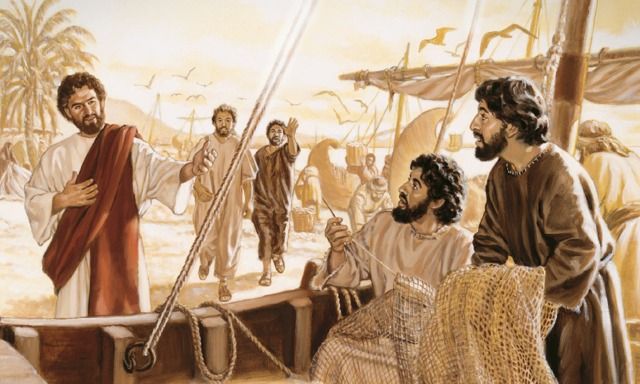
- James and John would have been pretty good Millennials – Passion was their name.
- In Mark’s account of the calling of the Twelve, Jesus named them “Boanerges” or “sons of thunder” (3:17)
- These two brothers were fiery with passion, and ready to advocate for their causes.
- Jesus knew their passion, and also knew the problems it could cause. Still, he called them and trained them.
- Today we will see, Lord willing three ways that Jesus can see how Jesus can temper our passions.
Message Points:
- As we begin today, the passage for our text is one of those places in the ancient manuscripts of the Bible where there is a longer reading and a shorter reading.
- The trend in Bible scholarship and printing today almost always favors the shorter reading.
- If some of your translations are fairly recent, they may not even have a footnote alerting you to the possibility of the longer reading.
- My preference is to note the difference and retain the longer reading.
- I do this primarily due to potential that the longer reading could be the one God intended.
- If we leave the longer readings out of our translations we very well could be leaving out some of the Word of God.
- I will make sure to note with you where the longer readings are in this passage.
- Back to James and John.
- These two came from a fairly prominent family. On numerous occasions they are called “sons of Zebedee”.
- While we know they had a fishing business from the occasion of Jesus’ call of them to ministry, Zebedee’s name was so well known that John was able to gain entrance into the high priest’s courtyard according to John 18:15-16 according to their name.
- These boys were used to getting their own way. James listed first is the older brother. John while seldom spoken of alone, certainly had no less privilege and pride of position.
- In fact it seems that these two may have led many of the disagreements about who was the greatest of the disciples. It must have killed them to see their less sophisticated, less prominent fellow fisherman Peter elevated as the spokesman of Jesus’ apostles.
- Speaking of Peter, it was Jesus’ custom to take Peter, James, and John with him to witness special moments in his ministry.
- From the raising of Jairus’ daughter, to the transfiguration, to those who were to pray with him in Gethsemane – Jesus usually called on these three to witness and learn directly from Him.
- Similar to Jesus’ renaming of Simon Peter, Jesus’ nickname for James and John was intended as a teaching tool.
- While we do not read it as much in the gospels as we do Simon Peter; Boanerges seems to have been Jesus’ way to diffuse their passionate advocacy with a little good natured humor.
- It may also be a way of referring to the way that would use their voices to boom over an audience. Certainly Herod Agrippa I knew which apostle was well known for his preaching and martyred him in Acts 12:1-2.
- As we look at what sparked the incident in our text today, we should note the context of what has just happened.
- Jesus was transfigured in Luke 9:28-36. John and James had experience a moment that they would celebrate for the rest of their lives.
- At the same time, as Jesus set his face towards Jerusalem for his final Passover. As they began to journey there, they went through Samaritan territory intending to stay in one of their villages.
- They did not welcome him in spite of his kindness towards them on many occasions including the Parable of the Good Samaritan and the visit with the Samaritan woman at the well in John 4.
- They did this because the Samaritans did not believe worship in Jerusalem was necessary or correct. While they claimed to be worshipping the God of the Bible, they refused to accept what the Bible said about worshipping Him in Jerusalem.
- Anytime people claim to worship our God but refuse to hear what He says in His Word, it should confuse, frustrate and even anger us.
- James and John were walking with the Word made flesh and had just seen that in the transfiguration, and these Samaritans who claimed to worship God would not even let them enter their town for fear that he might say they needed to worship in Jerusalem!
- That is the 1ST Point Jesus wants to teach these two men and us: Challenges and celebrations collide forming chaos (9:51-53)
- How often in our Christian lives does this simple principle prove true!
- In the moments of our greatest triumph, an equally great challenge is in the wings.
- When we are in our lowest valley, the best time of our lives may be on the way.
- In the chaos of a moment, we too quickly will forget that life ebbs and flows.
- For instance, in counseling, individuals with major depressive episodes are often reminded that on average these event only last for three to four months.
- While no one would want to be depressed for months at a time, the point of sharing that common observation in those months of deepest darkness it is wise not to make any drastic decisions.
- The same is true though in times of greatest celebration. How many of us after receiving a promotion or an inheritance have made an impulse purchase only to greatly regret it.
- Jesus wants us to recognize the flow of life and respond to situations instead of reacting to them.
- Responding to a situation is carefully considering our passions, and our beliefs and choosing what to do based upon them both
- Reacting is doing whatever our passions naturally lead us to do.
- For instance, while we do not know much about James’ conversion, we do know a great deal about John’s.
- He had already been a disciple of John the Baptist. John 1: 35-37 names one of the Baptist’s disciples as Andrew.
- Because John does not ever name himself in his gospel we assume the other disciple mentioned as leaving to follow Jesus is him.
- These two disciples had a great deal of biblical truth that they knew.
- They understood the Baptist’s message summarized in John 3:30 that the Messiah must increase and he must decrease.
- They did not react with disdain that John would highlight and even give praise to someone other than himself.
- When the Baptist said “look, the lamb of God” referring to Jesus as the Messiah, Andrew and John quickly considered what they believed, and their passion for seeking the Messiah, and responded by following Jesus.
- That is what I mean by responding instead of reacting.
- Perhaps you are hear in a moment of celebration this morning. Or a moment of challenge.
- Before you react to your situation, consider how in the midst of this chaos you can follow Jesus.
- From this reminder, we now turn to the “sons of thunder’s” reaction to the Samaritans.
- Knowing their Bibles and the account from 2 Kings 1, when Elijah stopped the emissaries sent to inquire of a false god for the Northern Kingdom’s monarch, James and John came up with a great plan to show the Samaritans who Jesus really was.
- Elijah had three dispatches of fifty troops come to collect him and take him to be punished before the Northern king.
- Both of the first two dispatches call Elijah the “Man of God” but did not really believe it.
- So Elijah said, “if I am a man of God, then let fire come down from heaven and consume you and your fifty men.”
- Sure enough the fire came down twice and the third captain who feared God took another approach.
- James and John thought this was the perfect plan. Jesus, let us go tell them that “if Jesus is the Messiah, then let fire come down and consume them.”
- These two had zeal for the truth. John would later pen John 14:6 which made it clear that no one could approach the Father without Jesus.
- However, as we see from their desire to call down fire, a zeal for the truth left this with only harsh brutality.
- That said if we had a passion for love without any truth, we would be left with sentimental hypocrisy.
- We react to chaotic situation out of our innermost passion.
- This is our 2ND POINT: We naturally respond to the chaos according to our unmitigated passions (9:54)
- On this occasion, no matter what good intentions these two had, their passions ran wild.
- And our passions run wild as well.
- We fall in love, or can’t let go of a grudge. We grieve endlessly over a lost loved one, or we gossip to everyone to hide the emptiness of our life . . .
- Passion that is not controlled by some higher principles is a problem.
- Their response is better characterized as reacting to the situation because instead of carefully considering their options, they chose to react according to their passions.
- On another occasion recorded in Matthew 20:20-24 these two passionately wanted to be given the best thrones in the kingdom.
- They convinced their mother to go to Jesus and advocate for them.
- Their family’s affluence, their service for Jesus, and Jesus’ special treatment for them warranted such an honor.
- Before saying anything else Jesus said to them “Are you able to drink the cup that I drink, and be baptized with the baptism that I am baptized with?”
- James and John had obviously heard Jesus refer to his coming crucifixion and resurrection, but they did not consider his question with that in mind.
- They just reacted in their pride to receive what they wanted, blurting our yes, we are able.
- While Jesus guaranteed them nothing as far as glorious thrones, he did promised that they would share in his suffering James was the first of the twelve to be martyred, and John living past all of his generation suffered the longest for Christ.
- If we only had our passions, we could never endure the pain of suffering for Christ, and our message would be brutal towards others.
- On this occasion, no matter what good intentions these two had, their passions ran wild.
- But Jesus transformed both James and John.
- While we do not know as much about James, we do know that as he went to his death, tradition tells us that he witnessed to his jailer rather than calling down fire upon him. Perhaps James remember John’s firsthand account of how Jesus prayed for the forgiveness of those crucifying Him.
- John on the other hand lived long into the early church. Tradition and Scripture tell us much about Him.
- Perhaps as early as Luke 9:49 John had begun to experience conviction about his need for more love. As Jesus told the disciples that they must become as little children, John confessed to rebuking people who cast out demons in Christ’s name. Rather than call down fire, he confessed.
- On the cross Christ had given John the responsibility to care for Mary, Jesus’ mother in John 21:17. Until the end of her life, tradition tells us that John lovingly cared for Mary. When people began to want to worship her, instead of calling down fire upon them, he asked Mary to write them a letter that said in essence, Worship Jesus, not me.
- Imprisoned on Patmos during the emperor Domitian’s reign, John wrote about the coming Judgment of Christ, all the while referring to himself as a brother and companion in the tribulation. His last words of Revelation were to pray “Come quickly Lord Jesus.” In other words, call upon the Lord instead of call down fire.
- Released after Domitian’s reign John wrote his epistles and his gospel until AD 98 when he died naturally. His later writings are marked by the these of love, truth, and witness. Tradition tells us that John was carried to church due to his infirmities and often said, “my little children love one another”. Once he was asked why he said this, John 13:35 in his mind he said, “it is the Lord’s command, and if this alone be done it is enough.”
- This leads to our 3rd point: Only by changing who we serve can we temper our passions (9:55-56).
- Look with me at the longer reading perhaps in your footnotes. Jesus’ transformation of the sons of thunder is summed up in this longer reading.
- First we need to stop and consider “of whom we are”.
- Then we need to stop and consider “what is His purpose”.
- Finally, we need to respond in kind.
- John writes in his first epistle words strikingly similar to this longer reading. Look with me at 1 John 4:1-3
- Dear friends, do not believe every spirit, but test the spirits to see whether they are from God, because many false prophets have gone out into the world. 2 This is how you can recognize the Spirit of God: Every spirit that acknowledges that Jesus Christ has come in the flesh is from God, 3 but every spirit that does not acknowledge Jesus is not from God. This is the spirit of the antichrist, which you have heard is coming and even now is already in the world. 4 You, dear children, are from God and have overcome them, because the one who is in you is greater than the one who is in the world.
- These sons of thunder learned how to temper their passions by serving a God who is greater than their passions.
- Look with me at the longer reading perhaps in your footnotes. Jesus’ transformation of the sons of thunder is summed up in this longer reading.
Conclusion:
- What about you today? Who do you serve? Turn today and follow Jesus Christ.
 Let the Shepherd Lead
Leave a comment