Intro: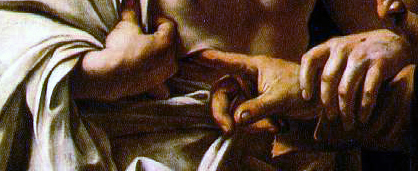
- In 1972 a little boy named Alexander gave voice to a number of pessimists and skeptics around the world when he proclaimed that he was having a “terrible, horrible, no good, very bad day.”
- Alexander’s day goes bad when…
- His chewing gum from last night ends up in his hair in the morning, he drops his sink in the sweater, and his brothers find the prizes in the breakfast cereal.
- On the way to school, he does not get to ride next to the window, his invisible castle picture was not acceptable for art, his singing is too loud, and when counting he leaves out the number sixteen. His best friend is no longer his best friend, and his lunch has no dessert.
- Afterschool, his dentist finds a cavity, one brother pushes him into the mud, and the other taunts him about crying over the mud. When he fights back his mother scold him for getting muddy and fighting with his brothers. He does not get the shoes that he wants, and his disrupts his father’s office as they pick him up.
- For supper the family has lima beans which he hates, there is kissing on tv which he hates, the bathwater is too hot, his marble goes down the drain and he wears pajamas he hates, and even the cat will have nothing to do with him.
- Many, like me, who have read Judith Viorst’s little book, or watched the 2014 movie adaptation, agree with Alexander that some days just are “terrible, horrible, no good, and very bad.”
- But in the book Alexander poses a question as well. He is skeptical about whether things in America will ever be better, but maybe if he were to move to Australia everything would be better there. His mother tells him that there are “terrible, horrible, no good, very bad” days even in Australia.
Hook:
- While Alexander is certainly a pessimist, he is also a skeptic.
- Every skeptic notices a situation that does not seem quite right and has doubts about whether or not it is true. Pessimist then also asses that situations will inevitably get worse.
- Skepticism in its most pure form, as stated by one of its most ardent supporters, like David Hume, may be self-refuting. He said that someone who doubted everything, or “the complete skeptic would win up starving to death or walking into walls or out of windows”. https://www.britannica.com/topic/skepticism/Criticism-and-evaluation
- Nevertheless, the world is full of skeptics, whose doubt is not total or all consuming, but enough to keep them from following Jesus Christ.
- Today, I hope to share with you through the lives of two disciples how Jesus answers the doubts of the skeptics.
Message Points:
- If it were not for the apostle John, who faithfully recorded Jesus’ interaction with many of the lessor known disciples, we would not know anything about Thomas and Thaddeus.
- The first of these disciples is so well known for his skepticism and pessimism that he is called “Doubting Thomas”.

- While this certainly is memorable, the name Thomas is actually a Greek form of the Aramaic word for twin.
- John 11:16 further gives clarity to Thomas’ identity as a twin by giving the actual Greek word for twin or double – Didymus.
- This is our first window into the character of Thomas.
- As a twin, he had a special connection with another person from the womb forward.
- We do not hear anything about his twin in Scripture. Either his twin died at birth, which may explain why his parents gave him such a unique name. In some way he was living for both of them and the name was a reminder of that fact. Consider the doubt and second guessing that Thomas would have faced as he tried to make every decision.
- Or he may have grown up his entire life with someone else, only to have them refuse to follow Christ. Consider the doubt about Christ that a twin sibling’s refusal to follow Christ would plant in the mind of Thomas.
- Either way, Thomas had to live with doubt, if for no other reason, to wonder what his twin would think about the situations he faced.
- The other disciple we will discuss today is not well known to us, but has three names.
- Matthew and Mark call this disciple Thaddaeus.
- Some longer readings of Matthew 10:3 says that his name was Lebbaeus called Thaddaeus.
- Thaddaeus is a name that comes from the Hebrew word for breast or (Exhaustive Dictionary of Bible Names) or as a mother would say it, “one close to my heart.”
- Lebbaeus is a name that comes from the Hebrew word for heart. This name alone can imply being courageous, but with Thaddaeus it is more likely implying something more like “mama’s boy” (Macarthur, 178).
- Luke and Acts translated literally call this disciple Judas of James.
- Our modern translators insert the word son, because the noun form of James normally implies that Judas comes from Him.
- That said, Catholic tradition tells us that Judas was the brother of Jesus and writer of the Epistle of Jude because the translations could imply that Judas is the brother of James. This is a linguistic stretch, but is possible, since the same noun form, paired with the word for brother can mean “brother of”.
- We know from Matthew 13:55 that Jesus did have a brother named Judas. We also know from Matthew 12:46-50, Mark 3:31-35, and Luke 8:19-21 that Jesus’ mother and brothers initially rejected his ministry.
- But Mary was at the foot of the cross. James his brother was counted as an apostle and led the Jerusalem church. It is not infeasible that Judas who lake wrote the epistle of Jude would have also come to follow Jesus.
- If Judas were Jesus’ brother, imagine the kind of doubt that he would have faced as he watched his brother, whom he had grown up with – perform miracles, oppose Pharisees, teach with authority, and die only to raise from the dead.
- John in chapter 14:22 makes one additional point of about his name – that he was not Judas Iscariot.
- I am sure that after the betrayal of Judas Iscariot, this Judas would have wanted to change his name.
- Judas was a name with a great deal of national pride for Israel, meaning praise the Lord. It recently had been the name of Judas Maccabaeus one of the leaders that formed an independent Jewish state for a number of years.
- But after Judas Iscariot, no Christian wanted that name. Luke the faithful historian retains it, but Matthew, his friend, and Mark who recorded Peter’s preaching called him by his other name. John too takes pains to not the difference.
- Just imagine the doubt that must have resided in Thaddaeus’ heart. To some he was a “mama’s boy”, while to others he was one full of heart, ready to ask good questions. But most crucially from the betrayal of Christ, Thaddaeus must have had thoughts like “will I fall away like the other Judas?”
- Matthew and Mark call this disciple Thaddaeus.
- Doubts can enter into our lives from a number of different directions.
- We can loose a job or watch a faithful believer suffer with cancer or some other disease.
- We can pray earnestly and not sense that God is moving in our lives or feel the relief that we expect to come.
- We can genuinely be confused about how one Scripture or doctrine fits with another and ask many questions.
- It may even be something as simple as the “newness” of certain beliefs or practices that inspire doubt.
- Doubts do not mean that we are automatically dispelled from Christianity.
- Doubts are areas often where we must measure the gap between what we know and what we are asked to believe and then take the leap of faith.
- There is no worldview or belief system that does not involve a leap of faith.
- Even atheism involves a leap of faith. They believe there is no God, but cannot examine every potential dimension or part of the universe to know for sure that there is no God. Thus they must take a leap of faith to believe there is no God.
- While we do not have time to examine the details here, Norman Geisler and Frank Turek in their book, I DON’T HAVE ENOUGH FAITH TO BE AN ATHEIST argue that the leap of faith to believe in Christianity is a smaller leap than any other belief system.
- This leads us to our 1ST major point today: The reason for questioning God does matter.
- The clearest window we have into the mind of Thaddaeus comes from the question he asks in 14:22.
- Thaddaeus unlike most of the other disciples, who expected that Jesus would be the Jewish Messiah for Jews and not Gentiles believed it when Jesus said that he was sent as the Savior for the world in John 3.
- As he listened to Jesus teaching on the night he was betrayed was shocked in John 14:21 when he said “Whoever has my commands and keeps them is the one who loves me. The one who loves me will be loved by my Father, and I too will love them and show myself to them.”
- In essence Jesus had said before that he was the Savior for the world, but now he was saying that he was only to be revealed to those who already had his commandments.
- This inspired Thaddaeus’ question in verse 22. Humbly, seeking to understand better, Thaddaeus interrupts Jesus. This took courage, after all other disciples had not fared so well when interrupting Jesus. But Thaddaeus wanted to understand and believe.
- Like the father of the mute and deaf child in Mark 9:24 Thaddaeus’ question was one that said, “I believe; help my unbelief.”
- Thus we have one reason that doubt can be positive, a cognitive reason – Do you question God because you really want to know him better? (John 14:22)
- Thomas, unlike Thaddaeus speaks several times in John’s gospel. From each occasion we see something about him.
- The first comes in John 11:16.
- We have heard that Lazarus has been ill and is now dead. Lazarus and his family lived in Bethany, near Jerusalem
- Jesus has been staying away from Jerusalem because of the threats of the Sanhedrin.
- But now that Lazarus is dead, Jesus has set his mind upon going to raise him up so that many may believe, including the disciples.
- Thomas, like the others doubted greatly that they could go to Jerusalem and not face death.
- As a typical pessimist would, He said what the others were probably thinking, “Let us also go, that we may die with him.”
- But unlike a typical pessimist and skeptic, did you notice the heart behind what he said? Thomas was saying he would rather die than disappoint Jesus by refusing to go, or be disappointed by a life where Jesus had died and Thomas had lived.
- No matter what Thomas may have been tempted to think negatively, he loved his lord
- Similarly when Jesus was teaching the disciples in the upper room Thomas again spoke up.
- With characteristic pessimism and skepticism Thomas stops Jesus as he was giving one of the most precious promises in the New Testament about preparing a place for those who believe in Him.
- Thomas says, “Lord we don’t know where you are going, so how can we know the way?’
- Like a pessimist he states the obvious, “If I don’t have the directions, I cannot go”
- But unlike a typical pessimist, Thomas’ heart again shines through. He desperately wants to be with Jesus. To be left behind would be a tremendous disappointment.
- Thus in his pivotal moment in John 20:24-25, when the others proclaim they have seen Jesus, we should not be surprised when like a pessimist he shares his doubt.
- He speaks up to say, “unless I see the nail marks in his hands and put my finger where the nails were, and put my hand into his side, I will not believe.”
- Thomas was a man who really loved and wanted to follow Jesus. His heart was totally committed to Christ, even though his brain constantly asked questions.
- He was now heartbroken that he was having to live without Christ, and could not bear to get his hopes up again.
- Thus we have our second positive reason for asking questions, an emotional reason – Do you question God as a defense against disappointment? (John 20:24-25)
- You may be here this morning, crying out to Jesus with all kinds of questions that essential say, “Lord if you are really God, prove it to me.”
- That question is not a sin, nor is it one that the Lord will dismiss. But, do not presume that the Lord will answer you how you desire.
- For example, say you had a sick loved one and prayed “Lord if you’re really God, prove it to me in my loved one’s sickness.”
- God may allow you to hear directly from your believing loved one how they are ready to go home to glory.
- He may allow you to seek that loved one suffer, and then see the peace on their face at death.
- He may come uniquely and heal that loved one, but he may also come uniquely to comfort you.
- This is the point, when you seek God with doubts, God seeks to answer those doubts in ways that speak directly to your need.
- The answer is in what he said to Thomas in John 14:6.
- Jesus said, “I am the way, the truth and the life. No one comes to the Father but by me.”
- When we have questions, Jesus wants us to turn to Him for guidance, for understanding, and for the eternal comfort he alone can bring.
- The first comes in John 11:16.
- The clearest window we have into the mind of Thaddaeus comes from the question he asks in 14:22.
- That is our 2nd point today, Jesus seeks to answer the doubts of skeptics.
- To those who want to know him better…
- In John 14:23-24, Jesus answers the question of Thaddaeus by telling him that anyone who love Christ will obey his teaching and anyone who does not love Christ will not obey his teaching.
- By implication, Jesus had given the Twelve a way to know who had received Him, and a promise to reveal himself to those who received him.
- As they preached and taught Christ’s commandments, those who received and obeyed Christ’s revelation of himself in the Word were those to whom he promised that he had manifested himself.
- The same is true today. As you hear God’s Word proclaimed and taught, and the gospel call issued to you that desire you have to obey it indicates that you have received Christ, and he is now directing your life.
- Tradition tells us that Thaddaeus took the gospel to Edessa an ancient city in Turkey.
- While there he healed the king, who according to Eusebius the church historian recorded the healing and gospel in the annals of the city.
- Even so, tradition tells us that due to his preaching in Syria he was either clubbed to death or beheaded for his faith.
- He never stopped preaching and teaching God’s Word because through it Christ would be revealed to the World.
- To those who question as a defense…
- John 20:26-29 tell us Jesus appeared again to his disciples when Thomas was present.
- While the others were present, this visit was for Thomas.
- Repeating Thomas’s own words back to him, Jesus commands him to put his finger in Jesus hands and his hand into Christ’s side. Jesus says then, “stop doubting and believe”.
- Thomas with tears and great joy said, “My Lord and My God!”
- This is important to note, Thomas declared his allegiance to Christ as his Lord.
- He also declared his belief that Jesus alone was God and he was for him.
- Lest we think that Jesus would personally show up for a visit every time someone doubted, verse 20:29 is a reminder that this was a unique occurrence. Thomas believe because he saw, but for most of us we must take a leap of faith.
- Seeing Jesus was enough to solidify Thomas.
- He took the gospel perhaps farther than any other disciple.
- There is a tradition that he took the gospel to India, even to Madras. Some churches in that country trace their beginning to Him.
- Perhaps fittingly, Thomas was martyred by a spear, the very symbol of His doubt made into a marker of his belief.
- To those who want to know him better…
Conclusion:
- Even after the resurrection, at the ascension, while all the disciples worshipped Christ, in Matthew 28:17 we are told that some doubted.
- The Great Commission is issued as a response to this doubt. Verse 28:18 tells us that Jesus came to the disciples.
- After all the people had come to him for healing and to hear his teaching; Jesus came to the disciples to answer their doubts.
- The answer is summed up in the two statement before and after the commission. Christ has all authority – even over death, and He will not abandon his disciples.
- If you trust Christ, I cannot promise you that you will not have a “terrible, horrible, no good, very bad day”. Even so, I can promise you an eternity that is blessed by following Jesus, who is the way the truth and the life.
 Let the Shepherd Lead
Leave a comment