Originally Preached 05/27/18
Intro: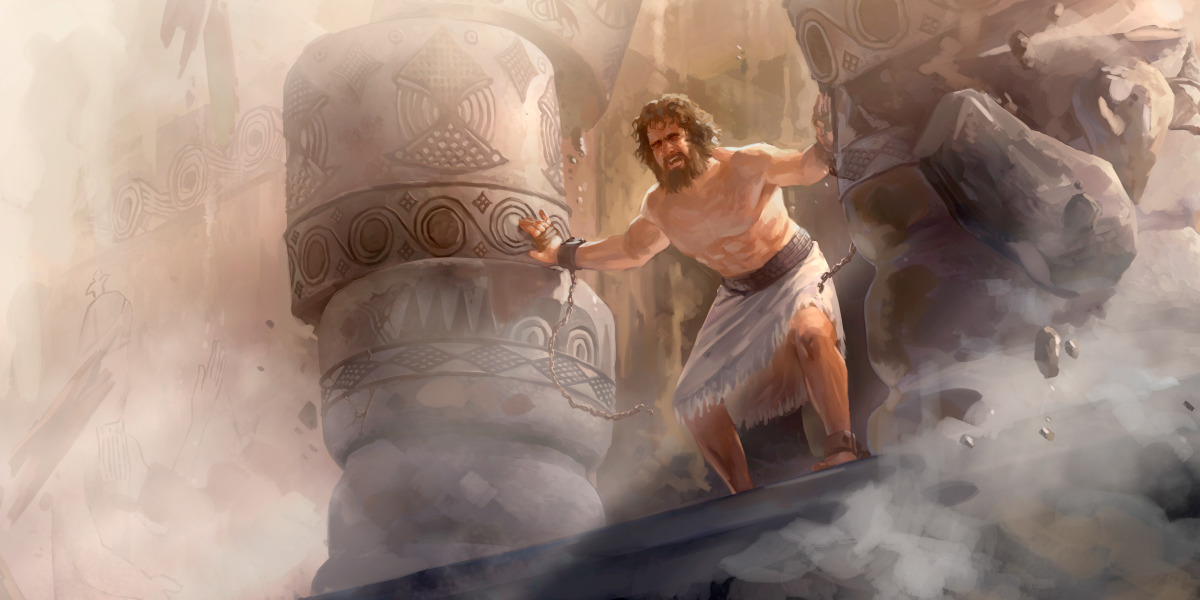
- Tomorrow, you may be enjoying some BBQ or time with your family, but around three PM stop for a moment and pray.
- In doing so you will join generations of Americans who have set aside this day to remember those who gave their all in service to this county.
- This holiday grew out of the grief that followed the Civil War.
- Imagine the sort of sadness if 2% percent of today’s US population, or roughly six million people were to be taken in some kind of combat defending this nation. Some sort of remembrance would seem essential.
- There were those buried far from the homes they fought to protect. For some families placing decorations was the only way they could honor their fallen dead.
- Today our medical technology has advanced. More of those who receiving critical injuries in places like Afghanistan or Iraq do come home alive, but with lost limbs or life altering changes. Remembering their sacrifice seems fitting as well.
- But remembering those gave their all, who sacrificed their lives, that is what Memorial Day is about.
- James A Garfield, long before he was president, spoke at a “Decorations Day” memorial these fitting words:
- I love to believe that no heroic sacrifice is ever lost; that the characters of men are molded and inspired by what their fathers have done; that treasured up in American souls are all the unconscious influences of the great deeds… …Each for himself gathered up the cherished purposes of life—its aims and ambitions, its dearest affections—and flung all, with life itself, into the scale of battle. ( https://www.whatsoproudlywehail.org/curriculum/the-american-calendar/decoration-day-address-1868 )
Hook:
- As Christians we should be the people who understand, remember, and celebrate sacrifice most of all.
- While our faith is not at its best a warrior faith, it is a faith of courage, conviction, and sacrifice.
- Jesus Christ gave his very life that many might be freed from the consequence and power of sin.
- Those who follow Him, throughout the generations of Christianity remember his sacrifice and give their own lives to advance His kingdom.
- Today, it is my hope to remind you not only to remember godly sacrifices, but to inspire you to give your all to Jesus as well.
Message Points:
- Today we read the last verses describing Samson’s life for us. The scene of Scripture opens upon the Philistines, not upon Samson.
- The rulers of the five major Philistine cities who had attempted to appease Samson at first in chapter 15:6, and then conspired to capture him through a bribe to Delilah in 16:5 now want to offer a great sacrifice.
- They do so to honor Dagon, the father of Baal, the Philistines’ chosen god. Dagon was a fertility god, whose name sounds like the Semitic word for grain. He was directly responsible for the grain harvests.
- The sacrifice was a reasonable excuse to gather the people, to enjoy portions of the roasted meat, and celebrate a vanquished foe.
- As we look at this great sacrifice, make no mistake such a sacrifice was more an opportunity for a national celebration, than an opportunity for solemn remembrance. The reference to it being great refers to its larger than normal size.
- This is more the jubilant atmosphere of the 4th of July than the solemn remembrances of Flanders field or the changing of the guard at the tomb of the Unknown Soldier at Arlington.
- That is our first point today. Reasonable sacrifices allow us to celebrate rather than sacrifice. (16:23-25a)
- Just think for a moment about our Christian life.
- If our relationship with Jesus is nothing more than a way for us to feel better about our situation, it is a quite reasonable sacrifice for us to give a few hours on a Sunday morning to our God.
- On the other hand if our relationship with Jesus is built upon his total sacrifice for us and others who will die and go to hell without him, a Sunday celebration is not enough, nor is the totality of our lives.
- Friends, we must not settle for a Christ-less Philistine Christianity – where we gather, celebrate, and demand more entertainment.
- Look at what the Philistines do in verse 24-25. This was a day of sacrifice to Dagon.
- They chant honoring his deliverance of their enemy into their hands. They reference Samson’s laying waste to their fields with the foxes, and his killing of so many. But they also celebrate their god’s victory.
- Then in high spirits – a euphemism for that literally means “when their hearts were good”, they call out Samson.
- Perhaps Ecclesiastes 10 sheds some light here when it says “Bread is made for laughter, and wine gladdens life, and money answers everything.”
- In other words any complaint the Philistine population might have harbored against their leaders was not satisfied by the generosity of the leaders celebration.
- They want Samson to entertain them. Remember he has been blinded, placed in chains, and forced to do the work of a mule or ox.
- They are not calling upon him to come out and do a number of parlor tricks.
- He can merely the object of ridicule and scorn.
- Perhaps he had been kept alive for this very moment so that the drunken, raucous people could maul and abuse him until his death.
- Before we judge the Philistines too harshly, remember friends, but for the grace of God there we might go as well.
- We need to regularly in worship and bible study be reminded and warned to raise our Christian expectations to what Christ saw as reasonable, not what we consider reasonable.
- When we recognize Christ’s personal sacrifice for us, it leads us to make great and formerly unreasonable personal sacrifices.
- Think for a moment about forgiveness. Forgiveness is not a reasonable action.
- There are some actions that apart from Christ we could never forgive, but demand justice.
- Forgiveness is promising that we will not remember someone’s bad deeds against them anymore. It is showing mercy and grace instead of justice.
- We can only do that because we have seen how Jesus did not justly hold our bad deeds against us, but chose instead to sacrifice himself for our sake.
- Think as well about missions. Missions is not a reasonable action.
- Going to a people like those in Nicaragua who are in the midst of national unrest does not seem reasonable apart from Christ.
- It would be foolish not to have the meeting like our mission team leaders did on Thursday with the missions organization to make sure of the safety preparations.
- That said, if we were to wait to go and share the gospel with people not experiencing unrest or hostility we would never go, share, and see God receive the glory for transformed lives.
- After all, Christ did not wait until we were asking for Him to come, sacrifice, and prove his love for us.
- Think for a moment about forgiveness. Forgiveness is not a reasonable action.
- It is Christ’s willingness to give His all that should be our guide.
- Since the resurrection, we can say with the apostle Paul in Philippians 1:21 – “For to me to live is Christ, and to die is gain.”
- We cannot settle for a Christ-less Philistine Christianity based on our own entertainment.
- No, let us aspire to give our all to finish strong for our Savior who gave His all finishing strong for us.
- Just think for a moment about our Christian life.
- How do we finish strong? Samson gives us a great deal of help in that regard.
- Notice with me that to finish strong we do not need our own strength.
- At the end of verse 16:25 and 26 that Samson is not the figure of immense strength or power anymore.
- Though his hair had begun to grown in verse 16:22, he is being led here like an invalid due to his blindness and likely his despair.
- The temple in Gaza was supported by two large pillars which is where Samson stood. While no temple to Dagon has been found in Gaza in 1972 there was a temple discovered that had two central columns, presumably of cedar, with stone bases. (http://www.biblearchaeology.org/post/2008/07/Between-the-Pillars-Revisiting-Samson-and-the-House-of-Dagon.aspx#Article ).
- Samson asked to be able to lean against the pillars. In his defeated, weakened state, this request did not seem out of place to the young boy or to the crowd. For all they knew Samson’s strength was a mere memory.
- This is good news for us!
- We may be gathered here today and hardly be able to stand on our own two feet. We may feel beaten up and overwhelmed by the world.
- You may be leaning upon friends, family, even this church service to keep you from falling.
- If that describes you, take heart! Those who are weak can indeed finish strong. In 2 Corinthians 12:9 we read that Christ’s “power is made perfect in weakness.”
- Friends, you can come to Christ in your weakness and still finish strong.
- Notice as well that to finish strong we must have faith, not perfection.
- If you read Samson’s prayer in verse 28 you will notice that it is an odd mixture of faith and self-centered petitions.
- He prays as a man of faith.
- Samson recognizes God as sovereign.
- He prays with full acknowledgement that it is God who grants him strength.
- He also prays as an ordinary man.
- He asks that God allow him to strike a blow against the Philistines, not to deliver his people, but for him.
- He specifically asks that God allow him to get revenge for his eyes, not to show the Philistines the falsehood of their idolatrous god.
- He prays as a man of faith.
- Again, this is good news for us.
- Do not think friends that you must know all the right words to pray, as if you need some mystical incantation that will call down the power of God.
- Do not think that you need to wait on a pastor to pray with you as if we were some shaman who has special access to God.
- Pray, friends, as the person you are. That is why the sinners prayer is so beautiful.
- It teaches you an attitude of the heart, not a magical formula.
- The sinner’s prayer is not just for sinners, but for saints who must live in this challenging world each day.
- The sinner’s prayer teaches us to pray humbly as…
- A needy and dependent sinner.
- A believer that Jesus is my Savior. He alone can help me.
- A disciple whose Lord is Jesus. I will follow Him.
- If you read Samson’s prayer in verse 28 you will notice that it is an odd mixture of faith and self-centered petitions.
- Friends that is our second point. If we really want to finish strong, we do so when we are humble and more easily able to give our all. (16:25b-30a)
- You might protest and say, but Samson died. How can you finish strong by dying?
- Last words are lasting words. Samson’s were “let me die with the Philistines”.
- There are a number of ways that we can take these last words in verses 16:29-30a
- First we might say that this phrase indicates that Samson no longer feared death. Like us who know the power of the resurrection, death no longer had a sting.
- We might also say that Samson had been lured and tempted into Philistine affairs all his life, now gave his life willingly so that others might not face those same temptations.
- We might also say that Samson’s cry was an outright defiance of the god Dagon who was a god of fertility and grain. Any victory Dagon had brought was a hollow victory because Samson’s god was certainly greater.
- No matter which intent was on Samson’s mind, or if all were mixed together in his thoughts, he finished strong by giving his all.
- And friends, though we are not called to give our lives to deliver people from the Philisitnes, we certainly are called to give our all.
- Our sacrifice as believers is giving ourselves to making disciples for Jesus Christ in our phase of life.
- As a child that may mean that you show your friends kindness and invite them to church.
- As a student or single adult that may mean that you give much of your time and effort to church projects like the mission trips or other outreach events.
- As young parents you will give your all to your children raising them to know the choice they must make for Christ.
- As a laborer you give your all to do your tasks well and glorify God when praised.
- As a retiree you give your all by using the experiences and influence God has given you to serve him.
- Verse 30 and 31 conclude the account by affirming that with God’s help Samson finished strong in his mission to deliver Israel and that his family honored him and gave him a proper and fitting burial.
- Samson killed more Philistines in his death than in his life. God’s prophecy has come true. In his life he only began to deliver Israel. In his death he truly delivered them.
- His family going to get his body and bury it was not merely a means to remember him, but an Old Testament way of showing their belief in the resurrection.
- Retrieving a body and burying it in the Promised Land only made sense if you believed God would raise up those who were faithful to him.
- Finally we are reminded again that Samson judged Israel for twenty years. As imperfect as he was, God still used him.
- You might protest and say, but Samson died. How can you finish strong by dying?
- Notice with me that to finish strong we do not need our own strength.
- That leads to our final point. Giving our all most glorifies God and blesses others (16:30b-31)
- Friends we are not strong on our own.
- We are not perfect or even close.
- But we can give our all to our God and know that he will be glorified and others will be blessed by our example.
Conclusion:
- While we have one more message in this series to examine what the New Testament says about Samson, let me challenge you today.
- Remember with me again why we have a Memorial Day. It is to remember the great sacrifices that have been made that give us a nation.
- Friends that is why it is important for us to remember stories like that of Samson. They help us to remember the sacrifices that give us an eternity
- As gritty and unpleasant as stories of sacrifice are, they remind us that God can help ordinary people, like you and I finish strong.
- That way when our time in life comes we can echo the words of President Garfield, “Each for himself gathered up the cherished purposes of life—its aims and ambitions, its dearest affections—and flung all, with life itself, into the scale of battle.” Let us give our all to Christ.
- Will you give God your all?
 Let the Shepherd Lead
Leave a comment