Originally Proclaimed: 03/24/19
 Intro:
- Sometimes when we are asked a question, it reveals more about the person asking than they might realize.
- For instance, when a child asks us, “are you hungry for ice cream?”
- It is a sure bet that they would like some ice cream.
Hook:
- While not all of our questions are as simple and innocent as that one, I want to suggest to you that all of our questions for Jesus reveal a great deal about us.
- In today’s passage, I want to share with you three types of questions asked of Jesus that reveal a great deal about those who ask.
Message Points:
- These questions come at a time in Jesus’ ministry when he has increasingly set His sights upon Jerusalem where the purpose for his ministry will be fulfilled.
- As He begins the journey to Jerusalem in verse 17 we see the first petitioner come to Jesus.
- He falls at Jesus’ feet and also calls Jesus “Good Teacher,” perhaps trying to flatter Him.
- He asks a common question “What must I do to inherit eternal life?”
- That type of question is one many people ask Jesus. That is our first Q&A question is “Can You get me into Heaven (10:17-31)?”
- This kind question shows that the person asking considers Jesus’ ministry as nothing more than getting guests into some kind of exclusive location.
- This man’s goal was not a personal relationship with the living God, but a chance to experience eternal life in Heaven.
- Perhaps this man had recently come face to face with his mortality at the death of a friend or a loved one.
- Perhaps he had always been obsessed with making it into heaven and went to every teacher in town for advice.
- One way or the other, this man’s question revealed that his focus was on what would happen to him when he died.
- The man’s question also hints at how he viewed himself when he asks “what must I do”?
- It’s as if the man thinks by tipping Jesus, the maître d’ he thinks he can get into eternal life.
- This man, however sincere, thought he belonged in Heaven and merely needed to check whatever box Jesus offered to gain entrance.
- In other words, this man, with all his possessions, merely needed to ensure his entrance into eternal life.
- Before we are too hard on this man, let’s think for a moment about why we came to church this morning.
- Did we come this morning to check off all the Christian boxes – including church attendance, Bible reading, giving our offerings, and praying – to ensure our place in Heaven?
- Or have we come, longing to encounter the true and living God as our friend instead of our judge?
- Do you hear the difference friends?
- Our major problem is not that we would do a little more or be a little better in order to gain eternal life.
- None of our possessions, not the wealth gained from hard work or the reputation gained from clean living compares to the goodness required in the Kingdom of God.
- Our major problem is that without our Living God’s mercy and grace we are doomed.
- This man’s goal was not a personal relationship with the living God, but a chance to experience eternal life in Heaven.
- Jesus knows our major problem and seeks to help us. Look at how he responds to this man.
- Jesus confronts this man’s flattery in verse 18, seeking to help this man realize the gulf between humanity and God.
- Mankind apart from God’s grace is bad.
- God is always Good.
- Jesus then affirms that this man knows the commandments in verse 19.
- Jesus lists what is called the second table of the law, all commandments dealing with our relationships with others.
- While they are not in order, they all are hear except the command “you shall not covet.”
- In its place Jesus in Mark’s gospel He uses the command “you shall not defraud.”
- Technically this word is very similar to the word steal, but involves a bit more scheming and trickery. In essence this word means that you want something so badly that you would plot to get it.
- Jesus certainly knew the commandments, but pointedly sought to apply them to this rich man by using this command. As a wealthy man, with some power, he could plot to get what he coveted; and Jesus wanted him to see his great need for God.
- But the man totally misses the point. In verse 20, he says he has kept all of these.
- Then Jesus according to verse 21 looks at this man and loves Him.
- This comment is unique to Mark’s gospel but casts the whole encounter in a new light.
- What Jesus says that drives this man away, is said in love to challenge this man to forsake everything so that he can truly follow Jesus .
- Notice Jesus challenges the man in a way that makes him consider the cost of following Jesus.
- The man according to verse 22 went away sad because of his wealth.
- Jesus confronts this man’s flattery in verse 18, seeking to help this man realize the gulf between humanity and God.
- Once this man left Jesus sought to dispel any illusions his disciples might have about receiving eternal life.
- In verses 23-25 Jesus first says it is hard or difficult for the rich to enter the kingdom of God.
- The disciples are amazed, and as he continues he offers a vivid picture that we know is impossible involving a camel going through the eye of a needle.
- Some have tried to explain away this example by saying that there was a gate called the “needle gate” for pedestrians only. A camel would have to lose all its cargo to squeeze through the gate. The problem with this explanation is that no archaeologist has ever found evidence for this “needle gate”.
- Further that explanation blunts Jesus’ point. By using the example of something impossible in the comparison, Jesus is saying that the rich entering heaven is even that much more impossible.
- This was so apparent to his disciples that they began to question who could be saved, since material wealth was seen as a reward for righteous living.
- This is exactly what Jesus had hoped the rich man would have realized.
- It is not our goodness or our wealth and possessions that help us gain entrance into the kingdom.
- No, in fact we must realize the impossibility of our situation without God.
- When we realize that we should be the last ones that God would save, then we are on the road to being saved.
- Jesus answers them with a key verse for this passage. Verse 27 tells us that salvation is impossible with man, but not so with God. All things are possible for him.
- Verse 28-31 further accentuates this point as Peter says that they have left everything to follow Jesus.
- Jesus then promises that no one who leaves home, relationships, or work for Him and for the gospel will not be rewarded.
- In fact he says those who leave all to follow him will have 100 times over the homes, relationships, work, as well as persecutions.
- But in the age to come there will be eternal life.
- Verse 31 offers Jesus’ answer in a principle to the rich man’s question. “Many who are first will be last and the last will be first.”
- In verses 23-25 Jesus first says it is hard or difficult for the rich to enter the kingdom of God.
- This kind question shows that the person asking considers Jesus’ ministry as nothing more than getting guests into some kind of exclusive location.
- Before hearing the next question Jesus for the third time in this gospel predicts his suffering, death, burial, and resurrection in verse 32-34.
- He offers this because many who followed him were afraid for him to go to Jerusalem.
- Jesus’ focus was on reconciling God’s relationship with humanity, but he took time to make sure His disciples, the Twelve knew his purpose for going to Jerusalem.
- This focus makes the request of James and John all the more stark.
- In verse 35 they come telling Jesus they want him to do whatever they ask.
- In other words they want to be in charge and command Jesus like some sort of genie in a bottle.
- Rather than rebuke them immediately he asks what they want.
- Then in verse 37 they ask to sit on either sit of him in glory.
- Perhaps Jesus’ focus on Jerusalem led them to believe he was going there to take over the city by force and establish his messianic Kingdom.
- Such a seat by his side would cement their status as fixtures in the kingdom of God. Further they would receive great power.
- This is another type of question that many people ask Jesus. Our second Q&A question is “Can You make me important 10:32-44)?”
- To their question Jesus asks in verse 38 if they can drink the cup he drinks or receive the baptism he receives.
- Jesus’ point is to help them to focus on what following him and even have a place in his kingdom means.
- Jesus will suffer for his people. He will give himself over to death that his people might live.
- Especially in light of the prediction of his passion this seems undeniable.
- But James and John miss his point. They brashly answer that they can drink his cup and receive his baptism.
- Jesus then tells them in verse 39-40 that they will drink his cup and receive his baptism.
- Sure enough they both would suffer for Jesus and for his people.
- James was the first apostle to be martyred in the book of Acts and John was exhiled when he wrote the Revelation
- But he cannot give those places to them, since they have already been prepared. Jesus does not deny that there are places of honor in his kingdom. Rather he assures them that those places are reserved for the ones that only God knows.
- The rest of the disciples overhear this and become indignant at James and John. Which opens the door for Jesus to teach them about servant leadership in verses 42-45.
- Jesus points out that the rulers of the Gentiles who have authority lord it over their subjects.
- If we ever think we are too important to serve another person for Christ we have become like the Gentile rulers.
- Then in verse 43-44 Jesus says that should not be so for believers.
- Jesus directly ties greatness to servitude.
- He makes the point so bluntly that he says whoever would be first must be slave of all.
- This is Jesus’ answer to James and John’s question in principle form. Those who willingly take last place will be rewarded
- Then in verse 45 Jesus uses himself as the example, pointing back to his prediction of his passion.
- He says that the “Son of Man did not come to be served, but to serve, and to give his life as a ransom for many.”
- Jesus’ willingness to suffer and die for us proves he is the most important one in the Kingdom of Heaven.
- Jesus points out that the rulers of the Gentiles who have authority lord it over their subjects.
- To their question Jesus asks in verse 38 if they can drink the cup he drinks or receive the baptism he receives.
- Finally then we come to the third question asked of Jesus in this passage.
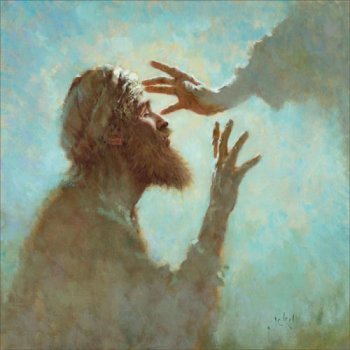
- By now Jesus has made it to Jericho, just over the Jordan River, and on the way to Jerusalem, He encounters Bartimaeus.
- Bartimaeus was a blind man, and unlike so many who came to Jesus, we know his name.
- This name literally means “son of Timaeus”, but the fact that we know his name seems to betray that his father Timaeus was well known in Jericho and had some means.
- Even so, it did not keep his son Bartimaeus from being reduced to begging by the roadside.
- Perhaps Bartimaeus, having known as a child the blessings of affluence, understood just how easily posessions and position could fail a person.
- So Bartimaeus, hearing that Jesus had come, cried out in verse personally for the mercy of Jesus, the messianic son of David.
- This man’s request of Jesus was different than the others.
- Even though many rebuked him, in verse 48 we read that he shouted all the more asking for the mercy of his messiah.
- This is the final type of question that people ask Jesus. The third question people ask Jesus is, “Can You help me to follow You (10:46-52)?”
- Notice Jesus’ question for Bartimaeus in verse 51. He asks “What can I do for you?”
- This man’s requests for mercy and willingness to humble himself drew Jesus’ attention and willingness to help.
- And notice that the blind man in that verse asked for sight, like so many others ha in the ministry of Jesus.
- Verse 52 tells us that Jesus like on other occasions says that this man’s faith has healed him.
- Notice the word immediately which tells us that in that instant the man received his sight and followed Jesus.
- This man wanted mercy so that he could personally follow Jesus, not the fleeting trappings of possessions or position.
- Notice Jesus’ question for Bartimaeus in verse 51. He asks “What can I do for you?”
- And Friends, the same is true for us. If we desire God’s mercy to follow Jesus, not the trappings of possessions or position Christ will certainly receive us and help us.
- Is that your desire today?
 Let the Shepherd Lead
Leave a comment